Making AI useful without removing human judgement
I designed an explainable AI co-pilot that turned anomaly signals into evidence, investigation and guided resolution—helping teams resolve issues 25% faster while keeping people in control of high-trust governance decisions.
Case study summary
- Impact
- 25% faster anomaly resolution
- Less manual analysis
- Clearer AI reasoning and control
- System scope
- Anomaly detection
- Lineage investigation
- Guided remediation
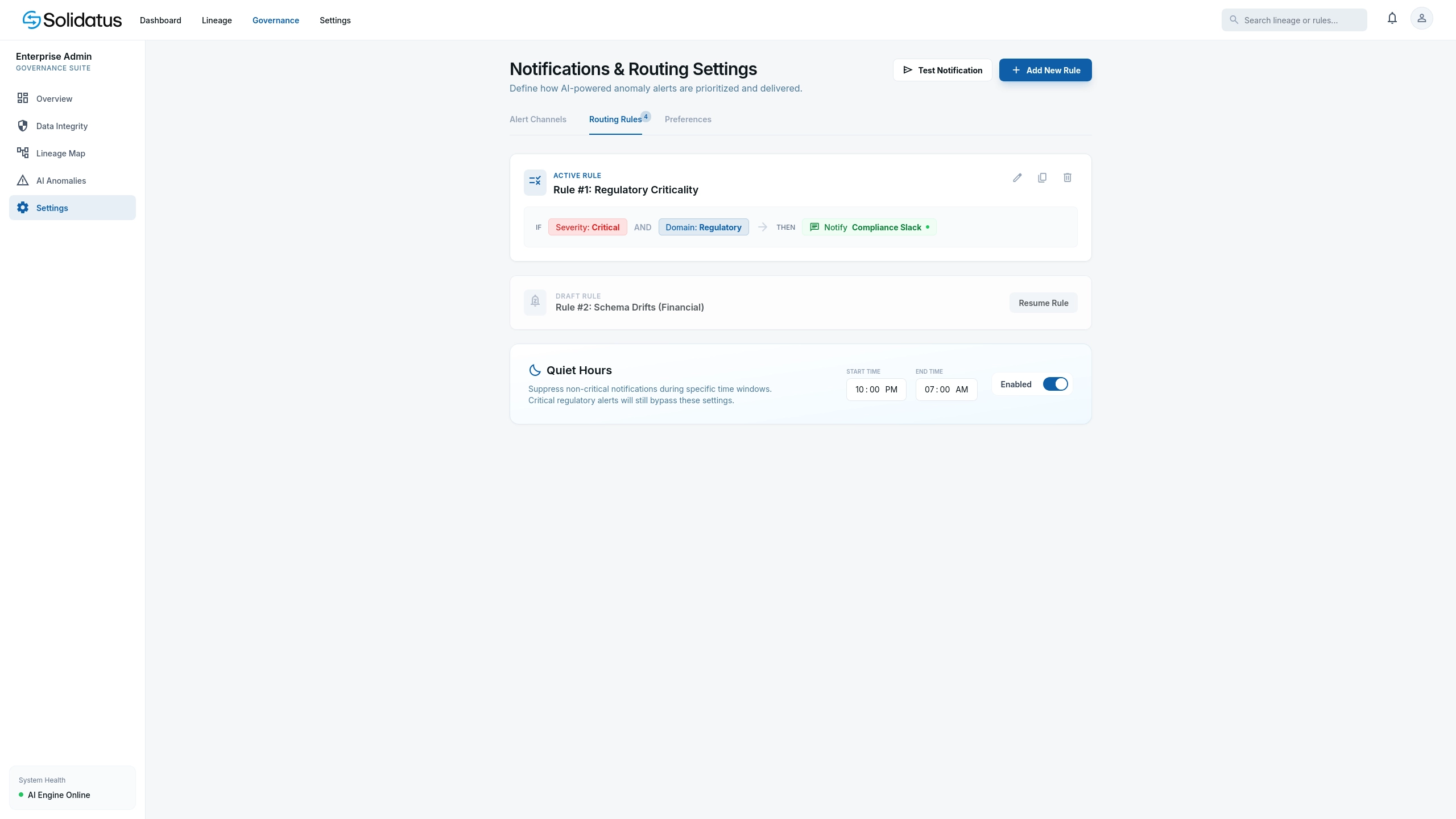
- Alerts, routing and calibration
- Company
- Solidatus
- Ownership
- AI product framing
- User research and workflow design
- Explainability and interaction design
- Prototyping and validation
The decision I owned
Keep the intelligence visible and the user in control
Use AI to detect and explain anomalies, then guide people through investigation and remediation instead of presenting a black-box answer.
Solidatus serves organisations managing complex data-lineage, compliance and governance workflows, including financial-services and public-sector clients. In that environment, simply detecting an anomaly faster was not enough. Users also needed to understand why it had been flagged, judge its significance and decide what to do next without leaving the workflow they already trusted.
What I recognised
The product challenge was not the machine-learning model in isolation. The value of the co-pilot depended on turning model output into a decision users could understand and act on.
- A signal without context still leaves the user doing the investigative work.
- An explanation without prioritisation can add more information without reducing cognitive load.
- A recommendation without confidence or control makes it harder to trust the system in regulated or high-risk work.
- A separate AI destination would force users out of established lineage and governance workflows.
I therefore treated explainability, workflow integration and user control as core parts of the product architecture rather than secondary UI features.
The trade-offs I resolved
| Need | Risk | Design response |
|---|---|---|
| Faster anomaly detection | False positives and alert fatigue | Severity, confidence, thresholds and feedback help users judge what deserves attention. |
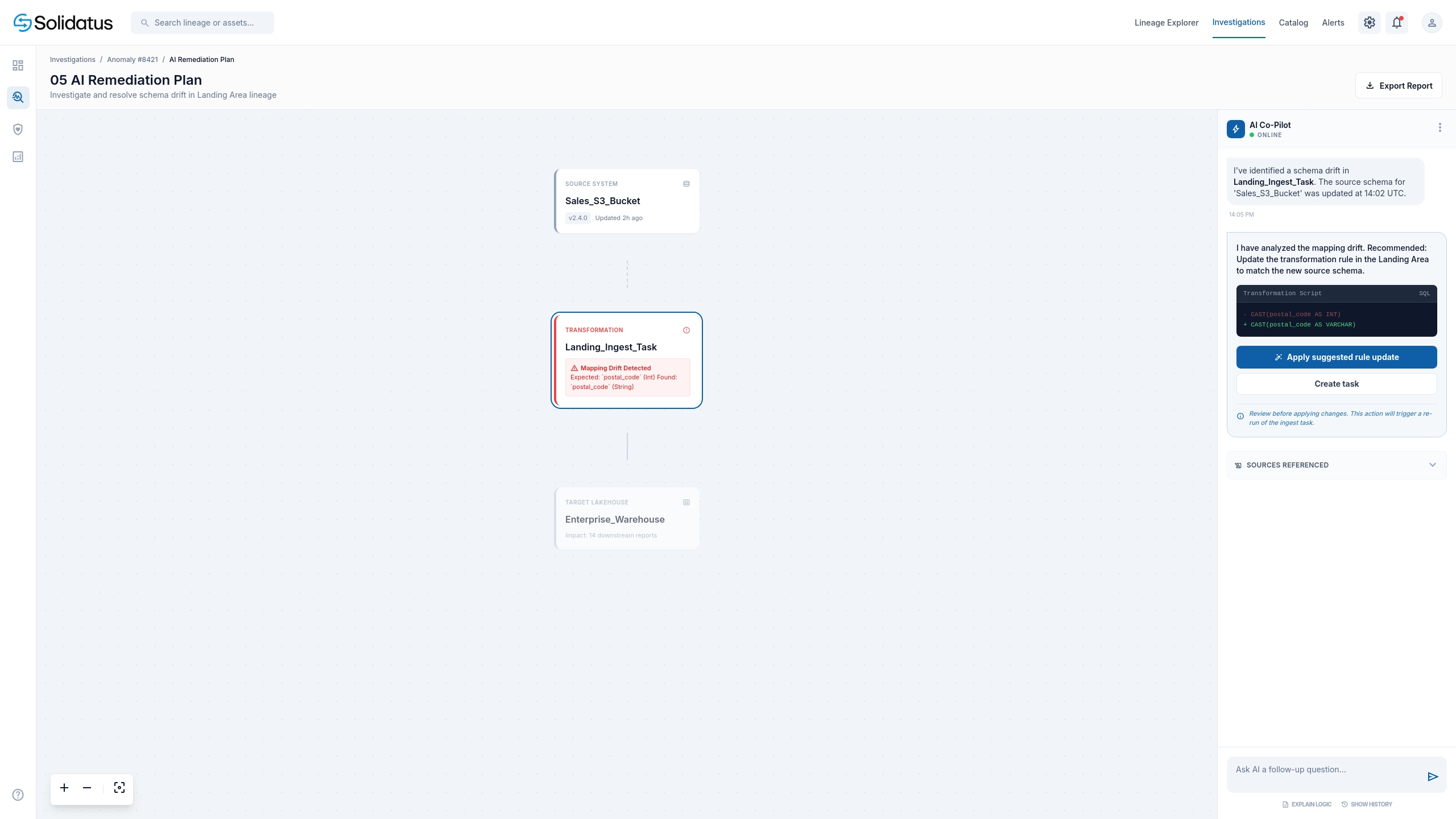
| Actionable guidance | Recommendations can feel like opaque automation | Explain why an anomaly was flagged and guide the user through investigation before resolution. |
| Technical depth | Governance evidence can overwhelm less-technical users | Show concise signals first, then allow drill-down into provenance, impacted assets and historical context. |
| Workflow integration | AI can become a parallel tool that creates more context switching | Chosen: embed detection, explanation and next actions inside existing Solidatus workflows and lineage views. |
The system I established
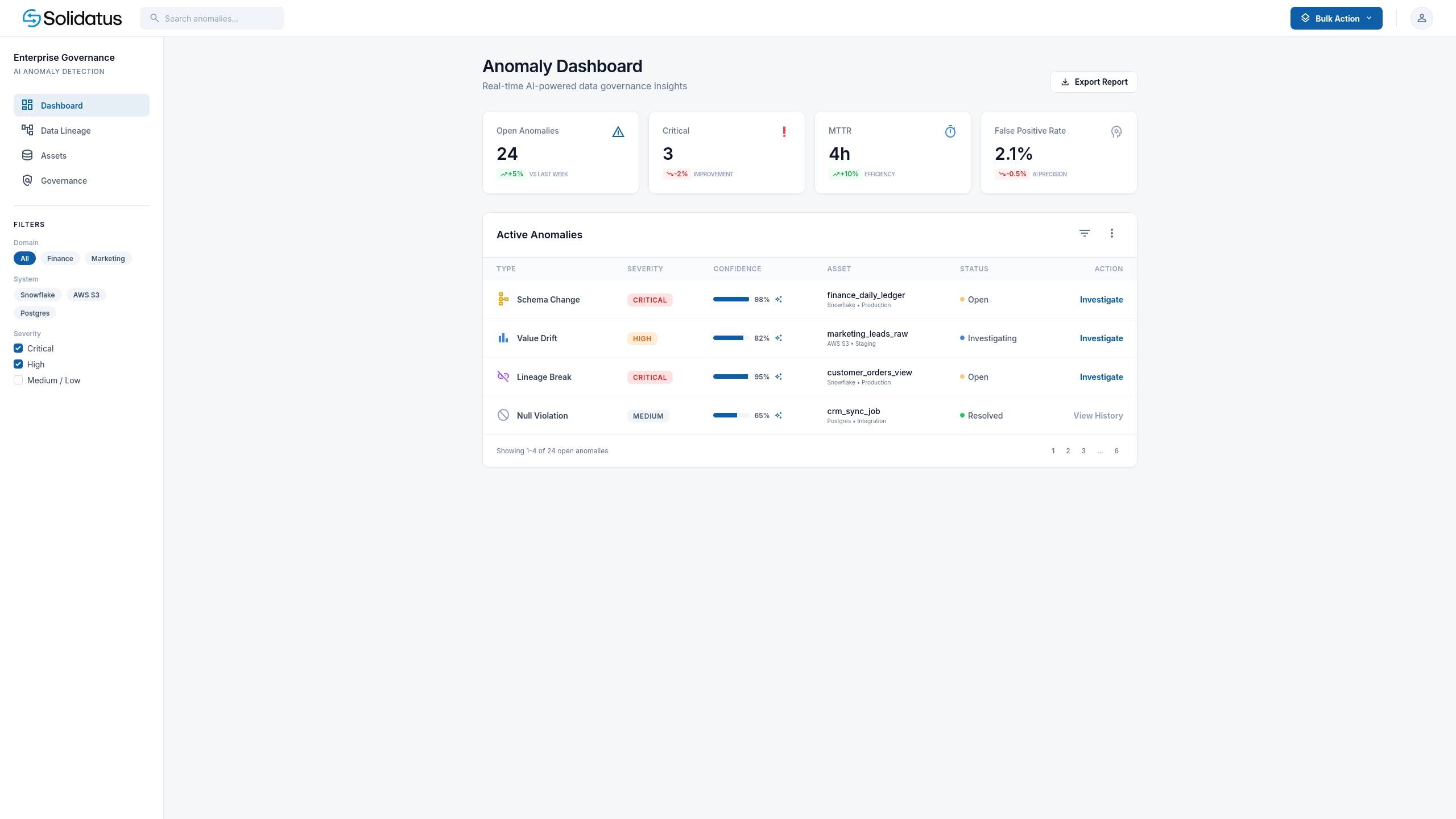
I designed the co-pilot as a connected decision flow rather than a collection of AI features. Each stage exposes the evidence and control needed for the next decision.
- DetectMonitor lineage, compliance and governance activity for unusual patterns.
- PrioritiseSurface severity, scope and potential impact so teams can triage quickly.
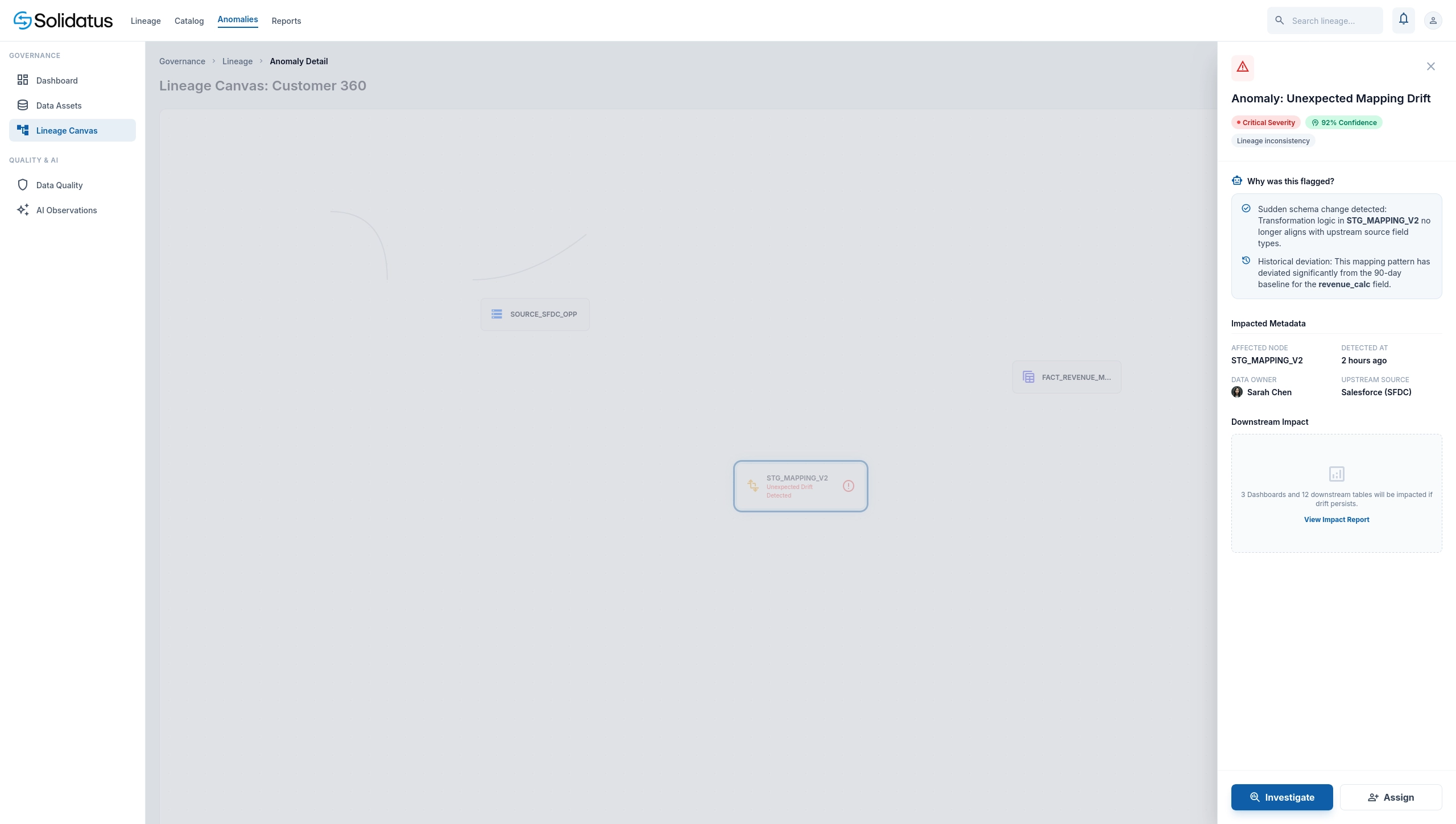
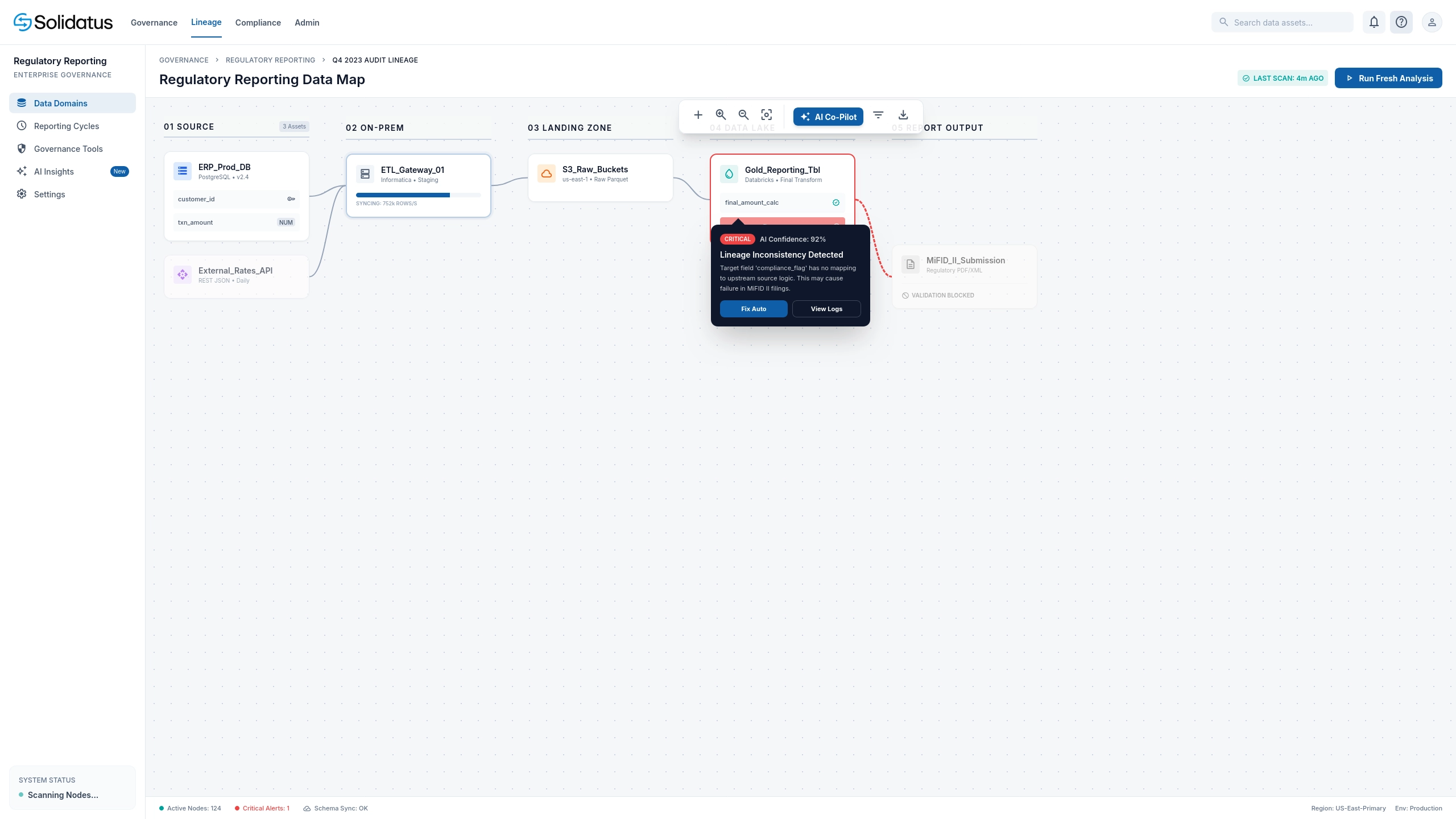
- ExplainShow why the anomaly was flagged and the confidence behind the signal.
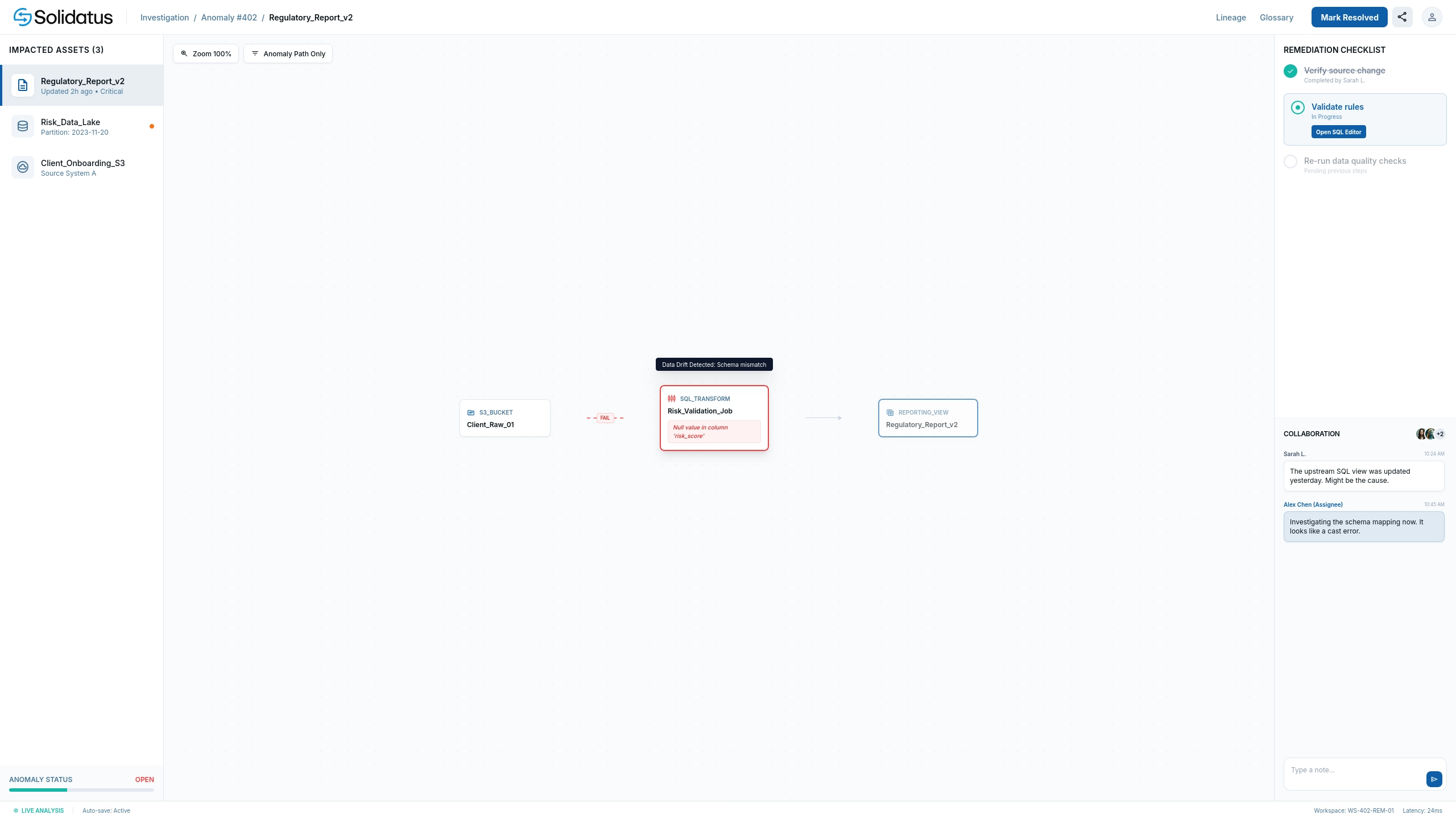
- InvestigateTrace affected entities, provenance, relationships and historical context.
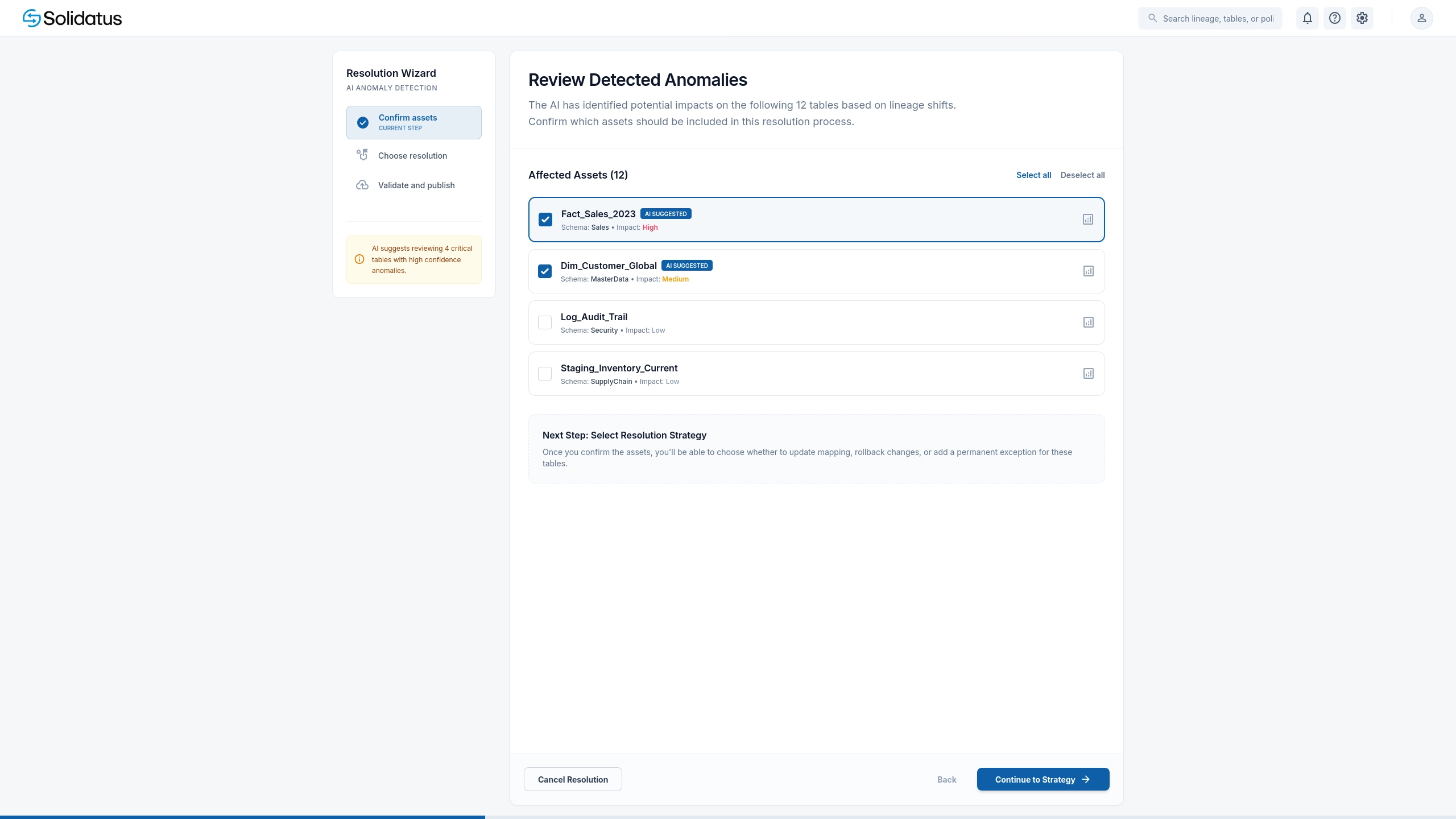
- ResolveGuide users through recommended next steps, owners and remediation actions.
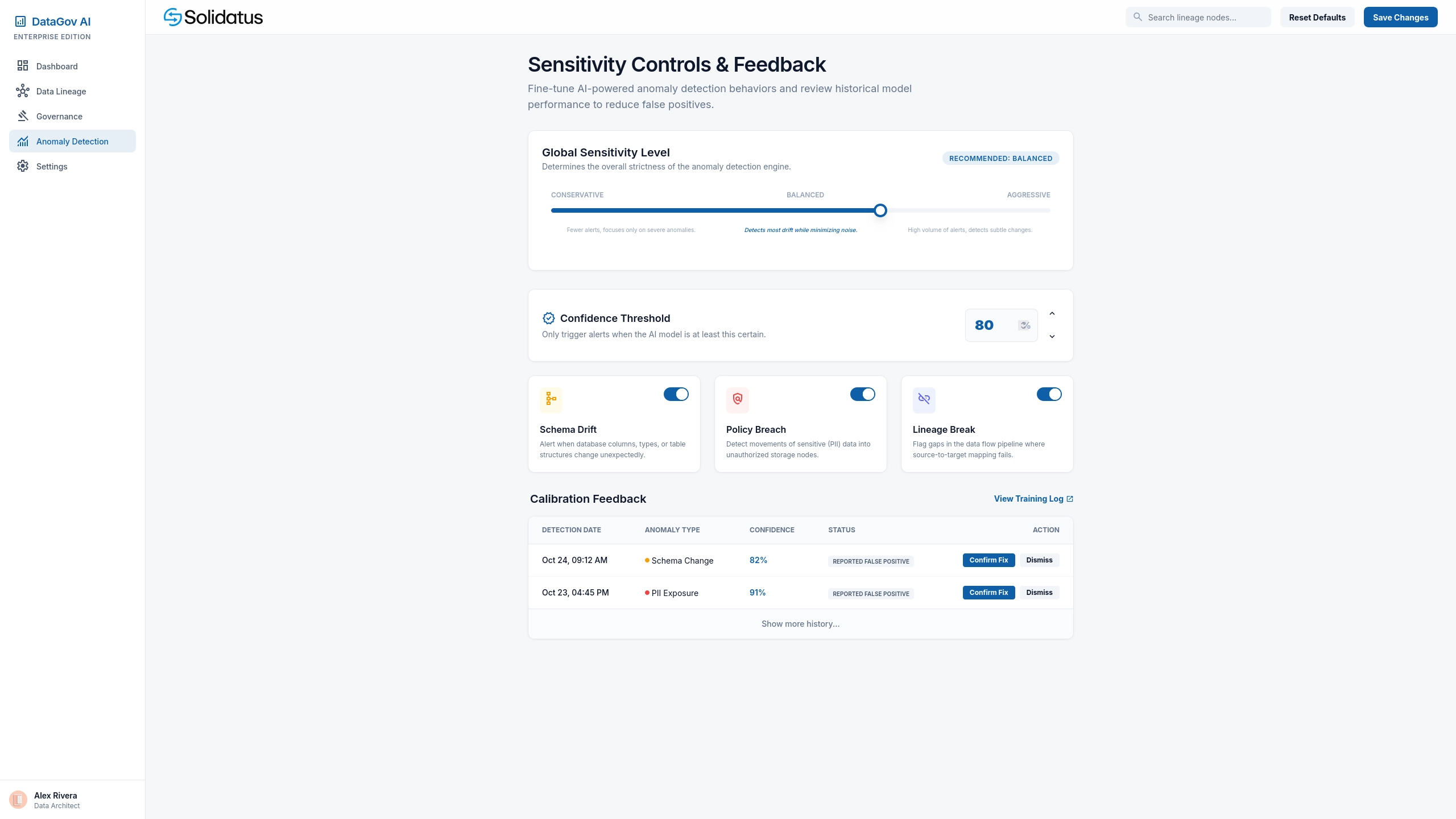
- CalibrateLet teams tune sensitivity and provide feedback so detection fits their environment.
Trust was part of the interaction model
I worked closely with AI engineers to refine how model behaviour was exposed to users. The interface showed the evidence behind a flag, confidence levels and the conditions that triggered it, while sensitivity controls let teams tune the system to their own data environment.
- Explainability
- Concise reasoning answered why an anomaly had been detected.
- Confidence
- Prediction confidence helped users judge how much weight to give a recommendation.
- Control
- User-defined sensitivity thresholds kept teams involved in how the system behaved.
- Traceability
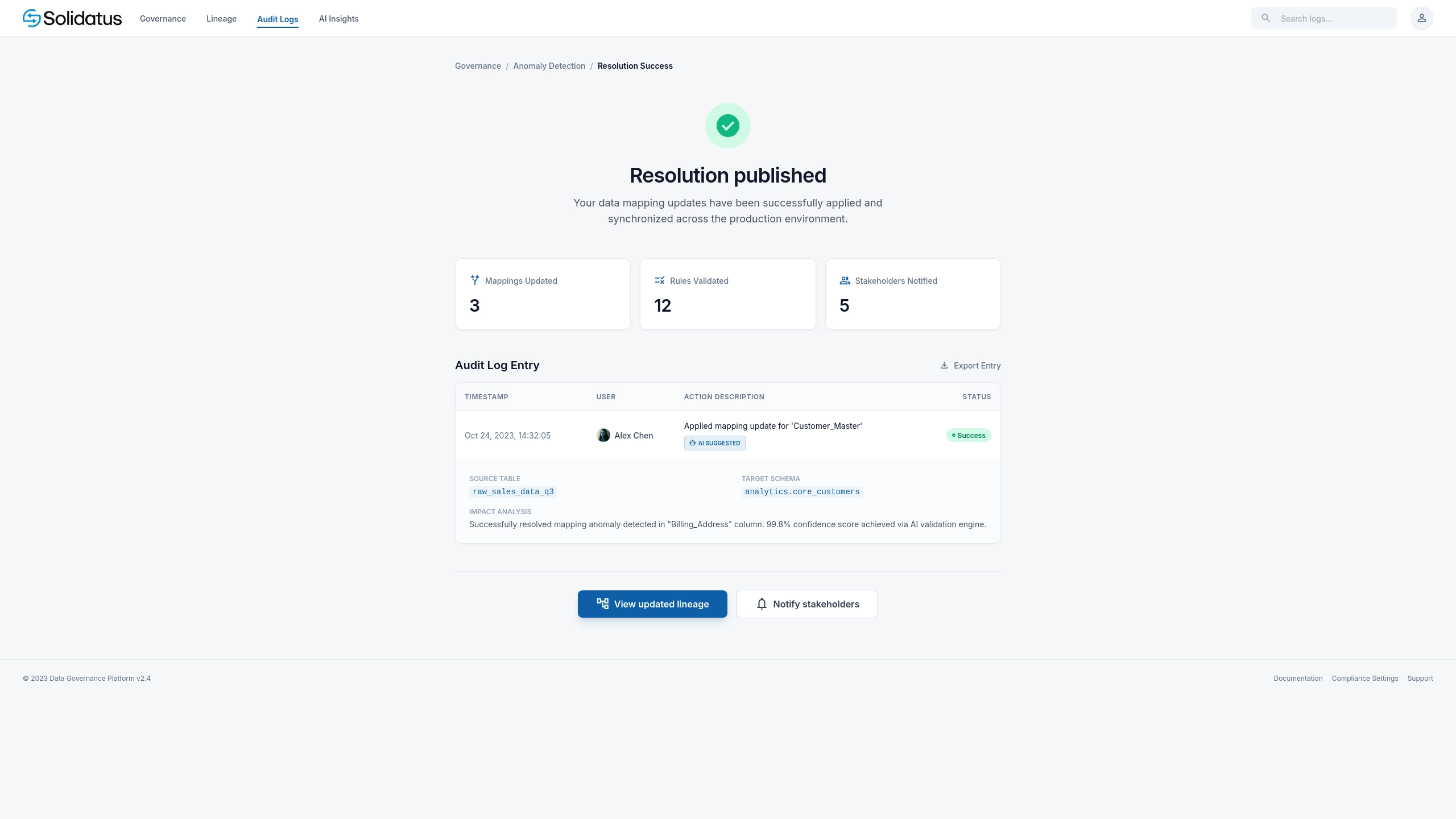
- Investigation context and resolution records supported accountable governance work.
I designed across model, product and workflow
The work crossed research, AI engineering, interaction design and validation rather than stopping at interface production.
- UnderstandInterview financial-services and public-sector users to learn how they interpret anomalies, risk and remediation.
- PrototypeUse Figma and ProtoPie to model the end-to-end experience from detection through investigation and resolution.
- ValidateTest clarity, guidance and usability iteratively, then simplify information and refine the flow from user feedback.
Evidence in the product
The remaining surfaces show how recommendations, routing, calibration, resolution and lineage context work together as one governance system.
What changed
Across the two-month implementation, the co-pilot shifted anomaly handling from manual analysis towards a more proactive, guided workflow while preserving transparency and user control.
| Change | Outcome |
|---|---|
| Resolution speed | Teams resolved anomalies 25% faster. |
| Decision support | Actionable insights reduced the burden of manual data analysis and gave users clearer next steps. |
| Trust | Explainability, confidence indicators and user controls made AI recommendations more transparent. |
| Workflow fit | The co-pilot integrated into existing governance and lineage workflows rather than requiring a separate operating model. |