One service platform, four personas and a rules engine
I defined one service-request model and a role-based rules layer so residents, frontline staff, managers and executives worked from the same state—reducing response times by 19% and complaints by 23%.
Case study summary
- Impact
-
- 19% faster response times
- 23% fewer resident complaints
- One state shared across four personas
- System scope
-
- Shared service-request object
- Role-based views
- SLA and escalation rules
- Immutable state history
- Company
- StarRez
- Ownership
-
- System architecture
- Multi-persona UX
- Operational modelling
- Rules and permissions
The decision I owned
Unify the operating model
Keep one service request as the source of truth; vary the interface and permissions by role.
Fragmented resident tickets, maintenance work orders and management reporting created reconciliation delays. I decoupled the interface layer from the data model so a state change made by one persona was immediately visible to every other authorised view.
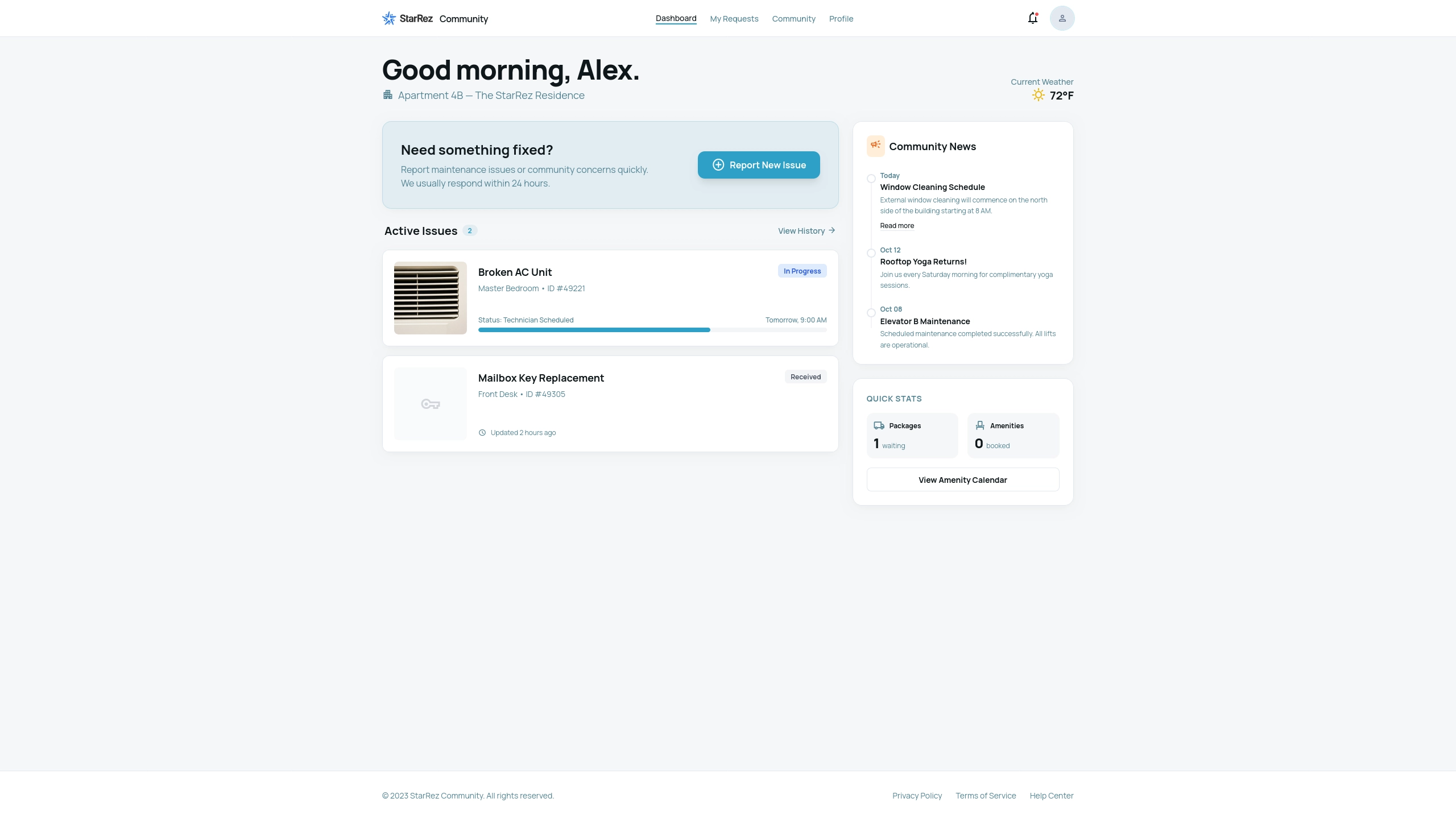
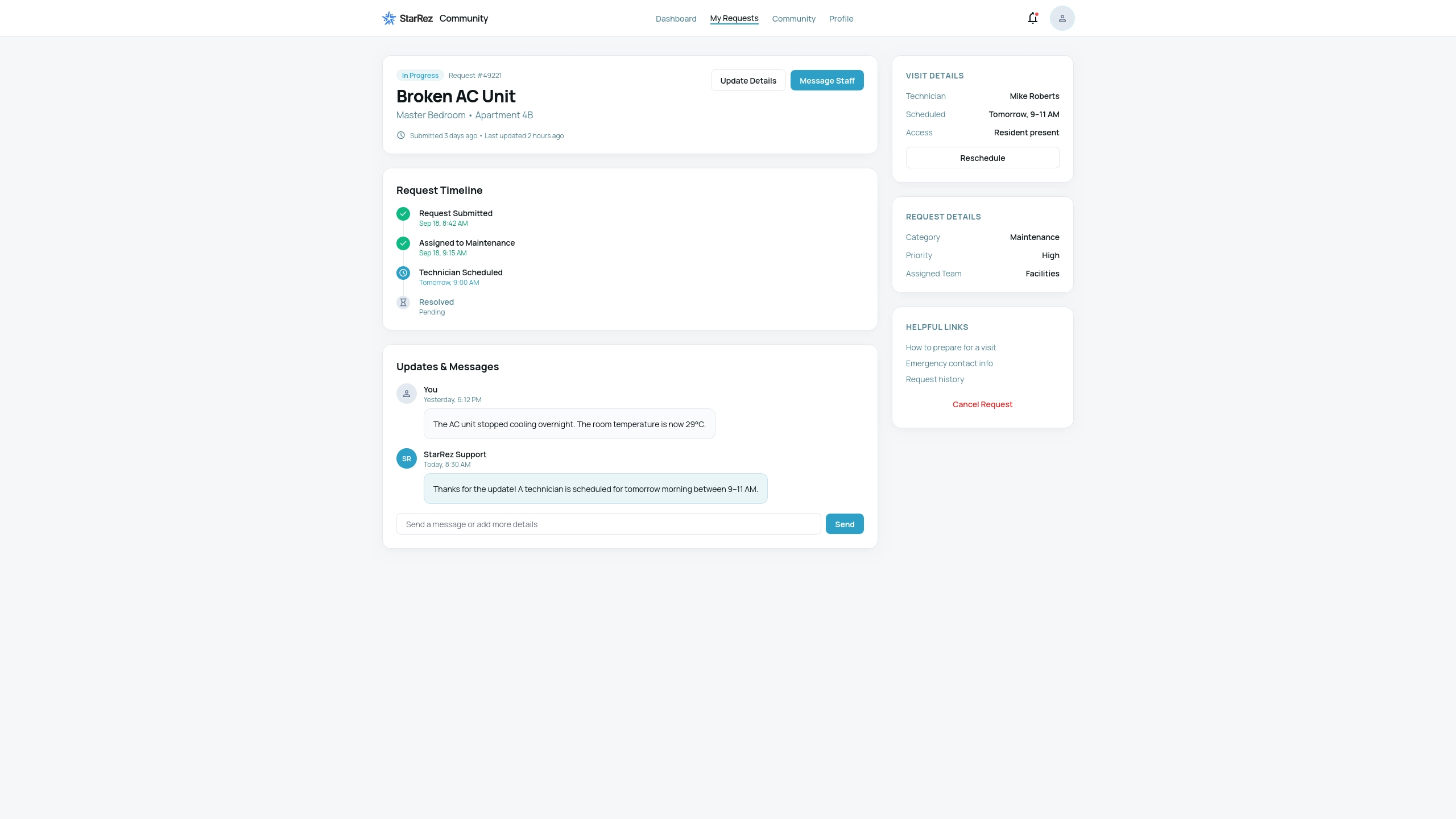
Four personas, one system
- Resident
- Self-service requests and real-time status.
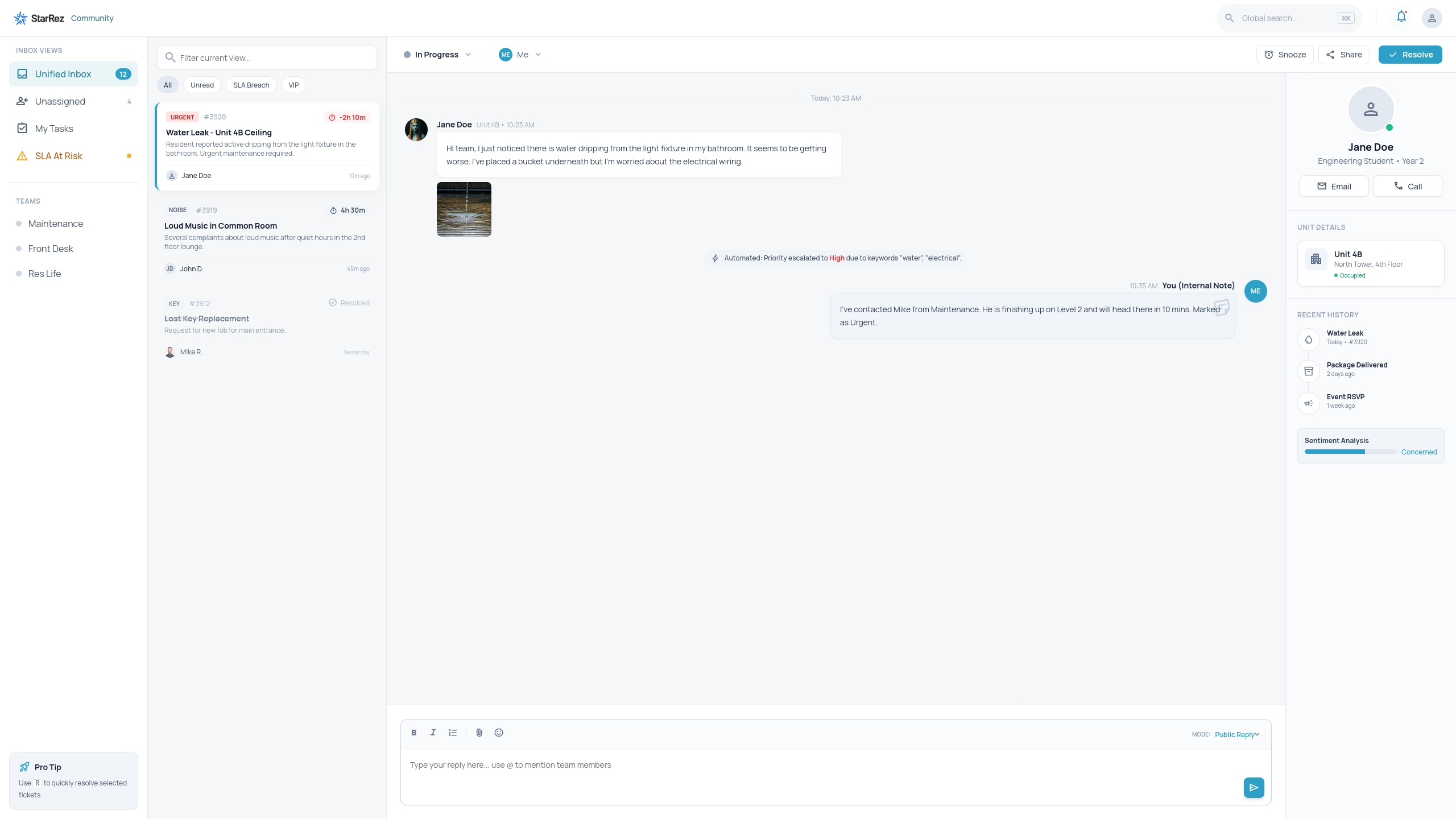
- Frontline staff
- Mobile triage and direct action tools.
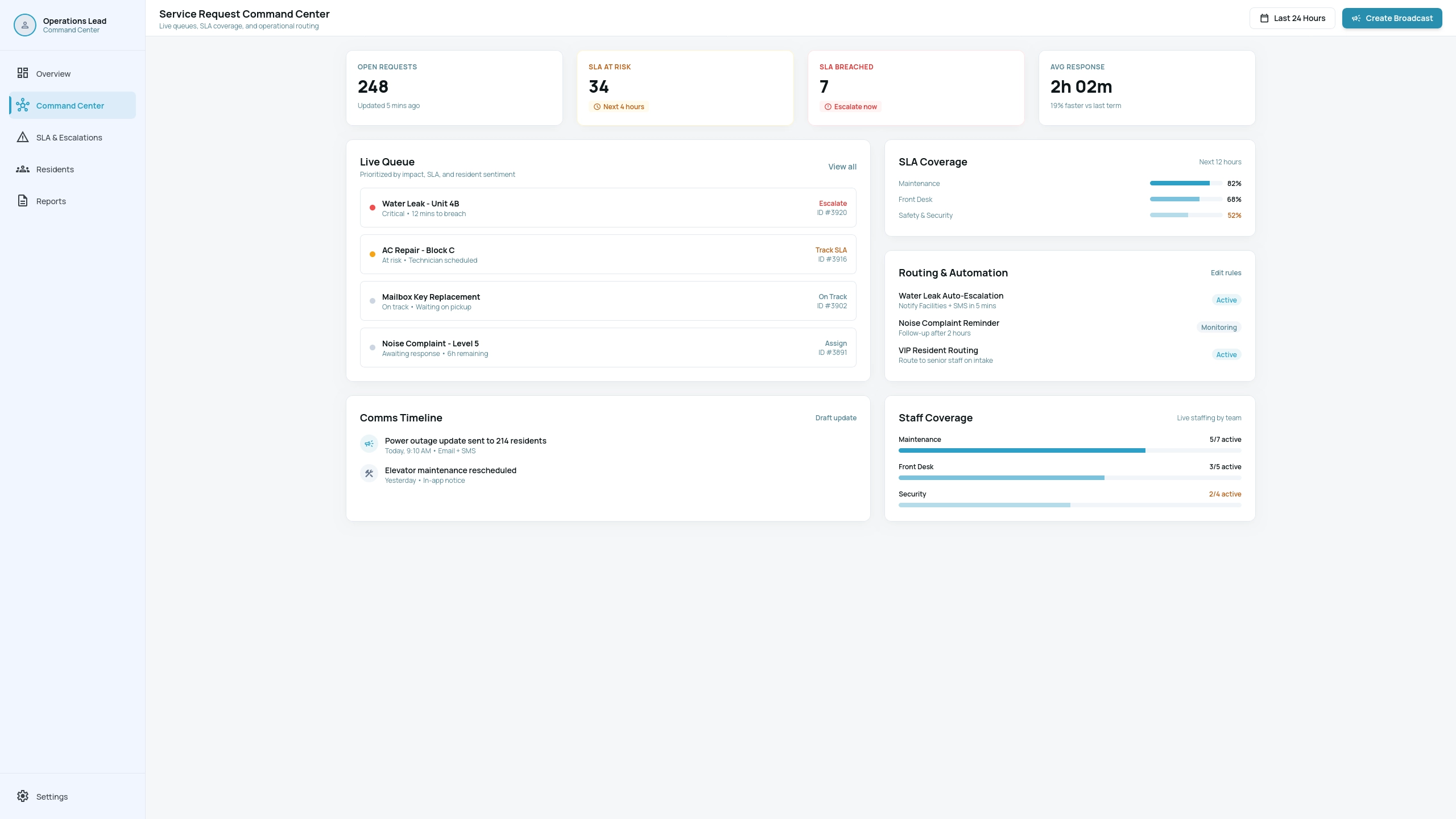
- Manager
- Command centre, allocation and escalation.
- Executive
- Aggregated performance and compliance.
The interfaces are different because the decisions are different. The underlying request, lifecycle and evidence remain the same.
The shared data object
I defined the request as a single primitive used by the portal, operational tools, rules engine and reporting layer. Three constraints protected integrity:
- Immutable state history for auditability and accountability.
- Role-based field visibility so each persona sees the right evidence and actions.
- Standardised metadata so routing, reporting and escalation operate on the same terms.
The schema below is a conceptual model used to explain the architecture, not a literal production API contract.
{
  "entity_id": "req_9942A",
  "type": "maintenance",
  "urgency": "high",
  "location_ref": "BLD-A-402",
  "lifecycle": {
    "current_state": "assigned",
    "assigned_to": "staff_uid_09",
    "escalated": false
  },
  "view_permissions": [
    "resident_read",
    "staff_write",
    "manager_override"
  ]
}
Rules, permissions and control
| Interface | Primary persona | Read access | Write access |
|---|---|---|---|
| Resident portal | Resident | Own requests only | Create or cancel |
| Mobile triage / inbox | Frontline staff | Assigned requests | Status and notes |
| Command centre | Manager | Facility-wide | Reassign or escalate |
| Executive dashboard | Executive | Aggregated | None |
The rules engine handled assignment, SLA targets and escalation without splitting the request into separate departmental records. Managers could override when judgement was needed; executives remained read-only.
System instances
Different surfaces, one operating system.
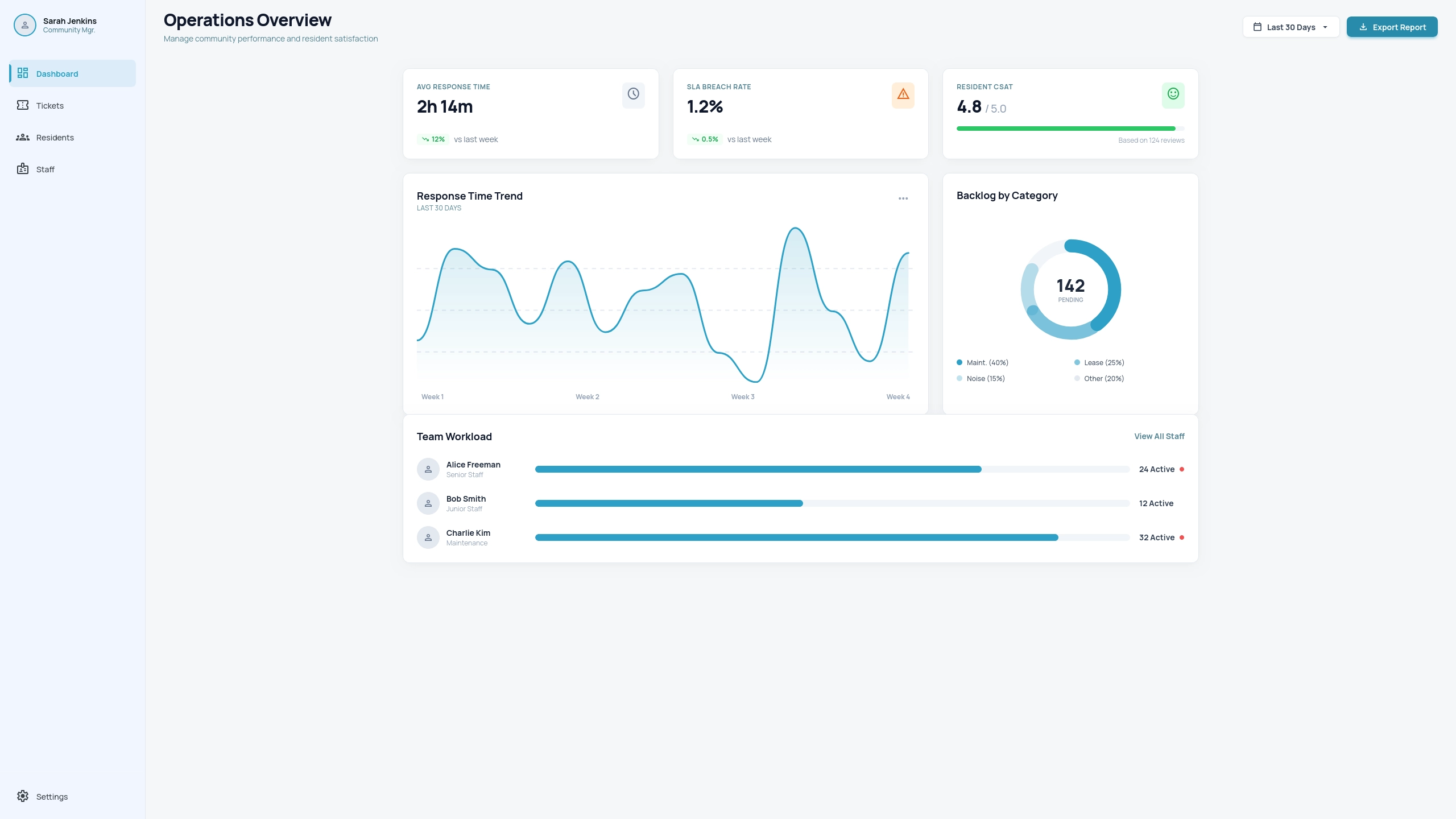
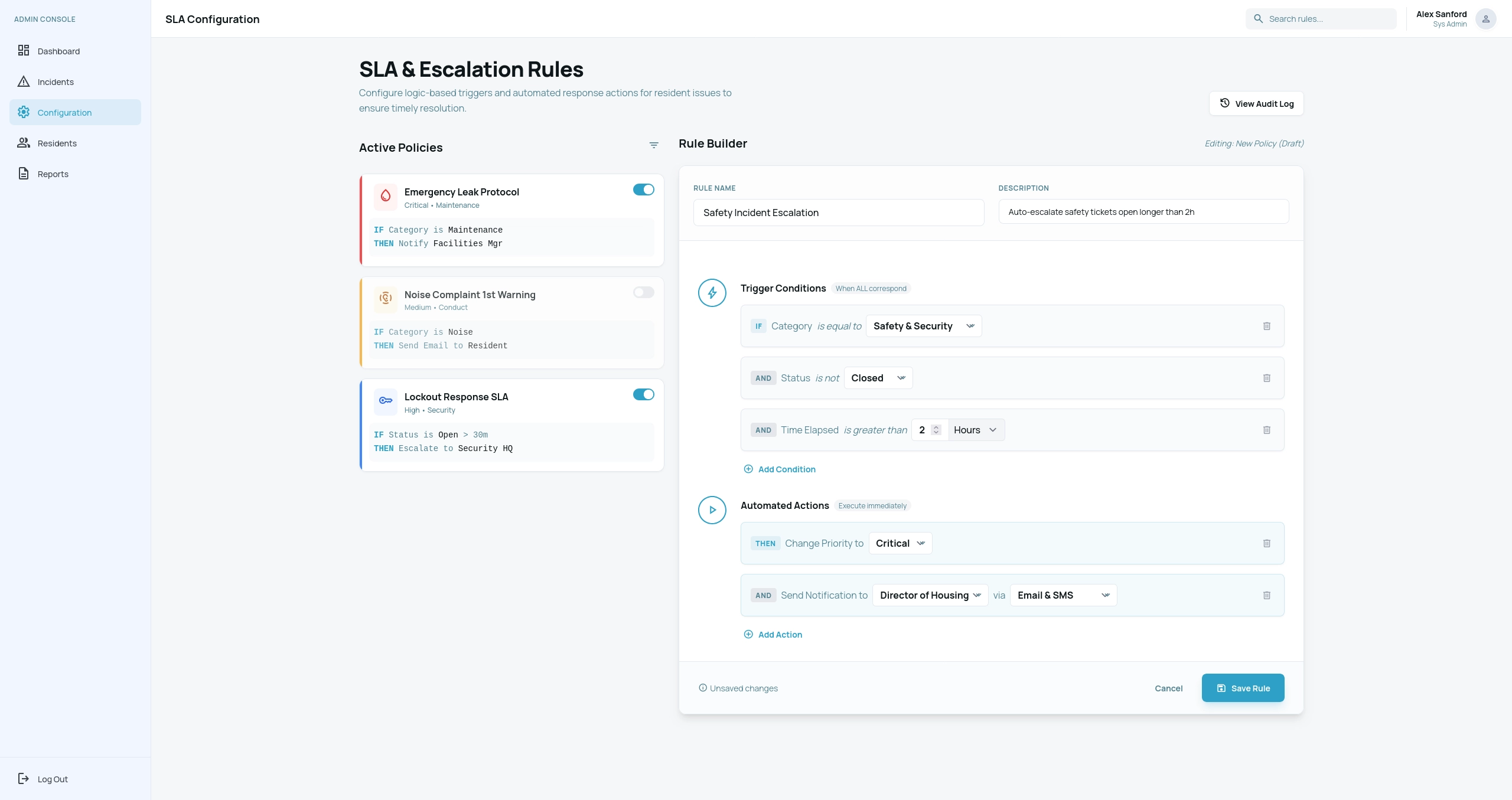
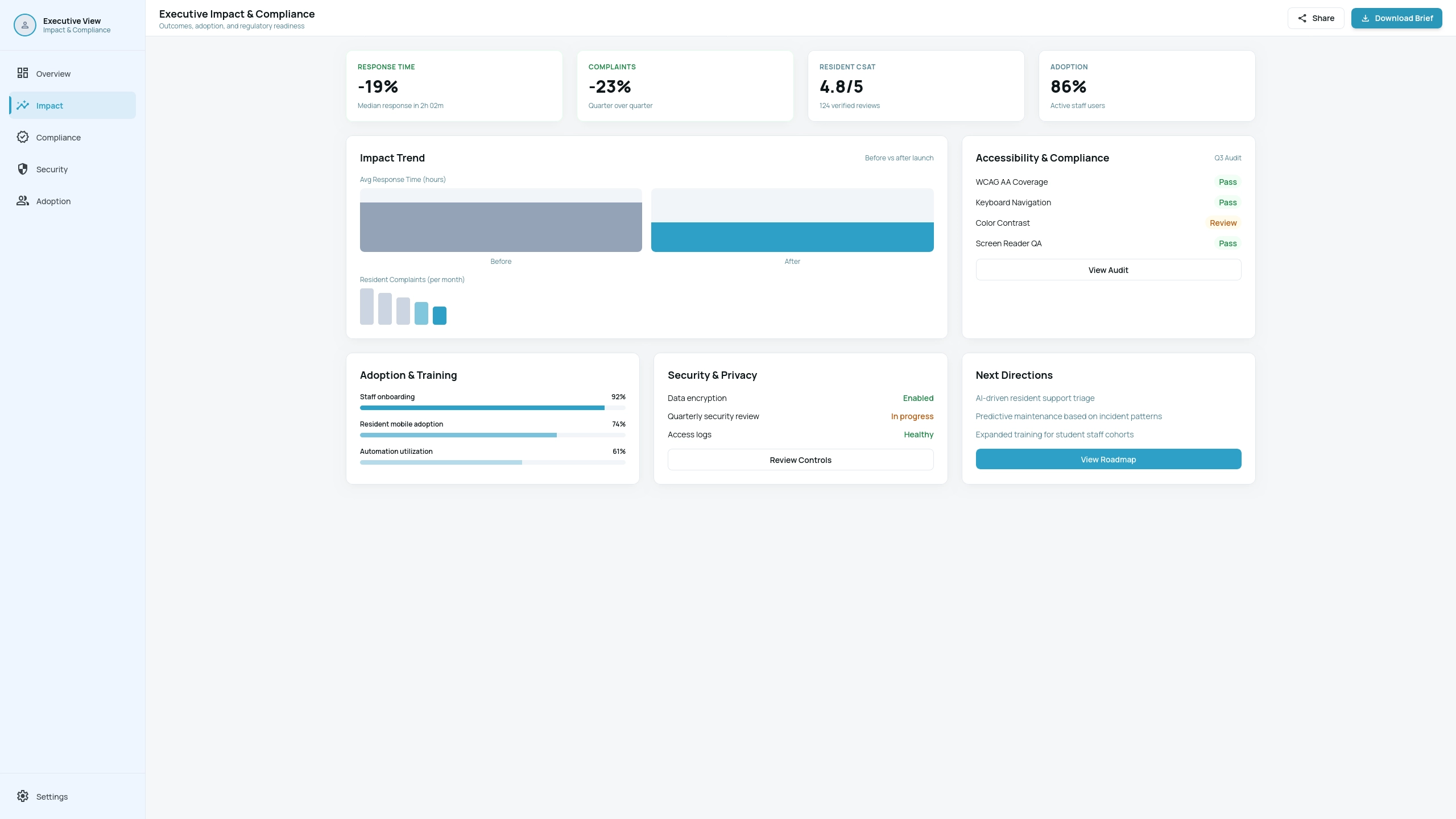
What changed
- 19% reduction in response times as teams worked from one current request state.
- 23% reduction in resident complaints through clearer status and fewer communication gaps.
- Managers gained operational control without creating a separate reporting workflow.